Living in a tiny home offers a unique blend of freedom and minimalist charm. Many people are drawn to this lifestyle for its sustainability and reduced costs. I find the appeal of living simply quite strong, and it allows for a focus on experiences rather than possessions. However, for those who want to Maximize Safety and Independence in Tiny Homes, careful planning becomes even more important.
Ensuring your tiny home is a secure and accessible space helps you enjoy its many benefits without compromise. We need to think about design choices and smart technology from the very beginning. This proactive approach can make all the difference for long-term comfort and peace of mind.
From the layout to emergency systems, every detail plays a part in creating a living environment that supports self-reliance. This article will explore practical strategies and considerations to make your tiny home safe and perfectly suited to your needs.
Designing for Accessibility from the Start
When I think about tiny homes, I always consider how crucial efficient design is. This is especially true when we talk about safety and independence. Planning for accessibility early on saves a lot of trouble later. It is much easier to build accessibility into the initial design than to try and add it after construction.
A well-thought-out layout can prevent accidents and make daily tasks simpler. This benefits not just older residents or those with mobility issues, but everyone who lives in the home. A clear path means fewer bumps and less clutter, which improves general safety.
Smart Layouts for Easy Movement
Open floor plans are often seen in tiny homes, and they are excellent for accessibility. They allow for wider pathways, which is important for mobility devices like wheelchairs or walkers. I recommend at least 36-inch wide doorways and hallways. This gives ample space for comfortable movement.
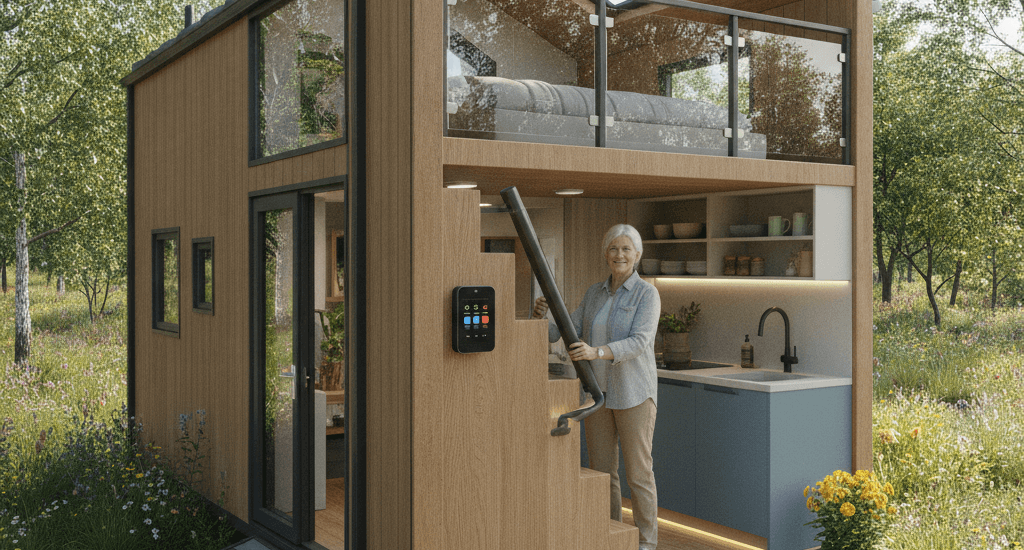
Eliminating steps or thresholds between rooms also reduces trip hazards. I always advise a single-level living area where possible. If a loft is part of the design, consider a sturdy, easy-to-climb staircase with handrails instead of a ladder. We want to ensure that every part of the home is accessible or that alternative solutions are in place.
Positioning frequently used items at an accessible height is another smart move. Think about kitchen counters, light switches, and thermostats. These small adjustments create a more user-friendly environment. We also look at bathroom layouts, ensuring enough clear floor space for turning and easy access to fixtures.
Incorporating Universal Design Principles
Universal design is a concept where spaces are created to be usable by all people to the greatest extent possible. This means designing for a wide range of abilities and needs. In tiny homes, this could mean installing grab bars in bathrooms, even if they are not immediately needed.
Lever handles on doors and faucets are easier to operate than knobs. We also suggest contrasting colors for switches and controls. This helps people with visual impairments. Floors should be non-slip, especially in the kitchen and bathroom, because preventing falls is a top priority.
Adjustable height countertops and seating can also be a valuable addition. These elements allow the home to adapt to different users or changing needs over time. A tiny home built with universal design principles is a more resilient and future-proof dwelling.
Essential Safety Features in a Small Space
Safety is not something we can overlook, regardless of a home’s size. In a tiny home, where space is compact, certain safety features become even more critical. I always emphasize having robust systems in place to protect against common hazards.
Because every inch counts, these features must be integrated efficiently without sacrificing functionality or comfort. We aim for smart solutions that provide maximum protection with minimal intrusion into the living space. Thinking through these details beforehand provides a secure foundation for living.
Fire and Carbon Monoxide Detection
Fire safety is paramount in any home, especially a tiny one. Cooking appliances are often closer to living areas, increasing the risk. I insist on having multiple smoke detectors, ideally interconnected, so that if one goes off, they all sound. We also recommend a carbon monoxide detector, particularly if you use propane heaters or other fuel-burning appliances.
These detectors should be tested regularly, and batteries replaced as needed. A small fire extinguisher should be readily accessible in the kitchen. I also advise keeping flammable materials away from heat sources. Being prepared for a fire is crucial, so having an escape plan is also vital.
We often see tiny homes with very efficient heating and cooling systems, but they still need careful monitoring. An alarm system can provide early warning, giving occupants precious time to react. This peace of mind is invaluable.
Secure Entry and Emergency Exits
Security is another key aspect of safety. Tiny homes, because of their portability and unique locations, can sometimes be more vulnerable. I always recommend strong, high-quality locks on all doors and windows. Reinforcing entry points provides an important deterrent against intruders.
For emergencies, having clear and unobstructed exit paths is essential. This means keeping doorways clear of clutter. If a loft is used for sleeping, an emergency escape window or an alternative exit route should be considered. These windows must be easy to open from the inside.
We also look at exterior lighting around the tiny home. Motion-activated lights can enhance security and help prevent falls at night. Ensuring that emergency services can easily locate your tiny home, especially if it is in a remote area, is another important step for overall safety.
Leveraging Technology for Greater Independence
Modern technology offers many opportunities to enhance both safety and independence in tiny homes. I have seen how smart devices can truly transform a living space, making it more responsive to individual needs. These tools can simplify daily routines and provide critical support.
Integrating smart home systems does not mean making your tiny home overly complex. Instead, it is about choosing purposeful technology that adds genuine value. We want solutions that are intuitive and reliable, empowering residents to live more autonomously.
Smart Home Systems and Automation
Smart home systems allow for centralized control of various aspects of your tiny home. Imagine being able to adjust lighting, temperature, or even lock doors from your phone or with voice commands. This is incredibly helpful for people with limited mobility or those who simply appreciate convenience.
I often suggest smart lighting that can be programmed to turn on or off at certain times. This can deter potential intruders and provide light when returning home after dark. Smart thermostats can learn your preferences and optimize energy usage, contributing to both comfort and cost savings. We believe automation can make tiny living smoother and safer.
Beyond convenience, these systems can automate tasks that might otherwise be difficult or unsafe. For example, automatic blinds or shades can be controlled without physical effort. Smart plugs can turn off appliances remotely, preventing fire hazards. These technologies truly Maximize Safety and Independence in Tiny Homes.
Communication and Emergency Preparedness
Effective communication tools are vital for independence, especially in a tiny home that might be in a more secluded location. I recommend having a reliable internet connection and a robust cellular signal. This ensures you can always reach loved ones or emergency services.
Smart speakers or voice assistants can be programmed to make calls or send messages with a simple voice command. This is a hands-free option that can be life-saving in an emergency. We also consider smart doorbells with cameras, which allow you to see and speak to visitors without opening the door.
Emergency preparedness also includes having power backups. A small generator or a portable power station can keep essential devices running during an outage. This includes communication tools and medical equipment. Being able to stay connected and powered up is a cornerstone of independent living.
Practical Solutions for Daily Living
Tiny homes require clever solutions for everyday living. The smaller footprint means that every item and every design choice must serve a purpose. I always tell people that functionality is key in these compact spaces. Thinking practically about how you use your home is essential.
Maximizing independence means making sure that routine tasks are not cumbersome. We want to reduce strain and simplify chores as much as possible. This approach enhances the daily experience and contributes significantly to overall well-being.
Ergonomic Storage and Organization
Clutter can be a safety hazard in a tiny home, so smart storage is a must. I advocate for built-in storage solutions that utilize vertical space efficiently. Think about wall-mounted shelves, under-bed drawers, and multi-purpose furniture. These help keep floors clear and pathways open.
Ergonomics play a big role too. Heavy items should be stored at waist height to prevent back strain. Frequently used items should be within easy reach without bending or stretching. We sometimes suggest pull-out pantry shelves and accessible cabinet designs for kitchens.
Labeling storage areas can also save time and prevent frustration. When everything has a designated place, it is easier to maintain order. This careful organization not only looks good but also contributes to a safer, more independent living environment.
Adaptive Tools and Appliances
Choosing the right tools and appliances can make a significant difference in a tiny home. I often look for compact, multi-functional appliances that save space and energy. For example, a toaster oven that also functions as an air fryer reduces the need for multiple devices.
For individuals with specific needs, adaptive tools are invaluable. This could mean kitchen gadgets with ergonomic handles or long-reach grabbers for items stored higher up. We also consider touchless faucets and soap dispensers for hygiene and ease of use.
Appliances with clear, large controls and audible feedback can also assist those with visual or hearing impairments. These thoughtful selections ensure that everyone can manage their home effectively. They truly help Maximize Safety and Independence in Tiny Homes for all residents.
Health Monitoring and Emergency Response
For many tiny home dwellers, maintaining health and having reliable emergency support is a primary concern. I know that feeling secure about your health in any living situation is crucial. In a tiny home, where access to immediate help might sometimes be further away, robust monitoring systems are especially vital.
We often discuss solutions that provide reassurance without being intrusive. The goal is to create an environment where health can be continuously tracked and help can be summoned quickly if an issue arises. This thoughtful integration of health and safety supports a truly independent lifestyle.
Wearable medical alert devices are an excellent option for monitoring personal health and safety. These devices can detect falls or allow the wearer to press a button to call for help. They connect to a monitoring center that can dispatch emergency services or contact family members. These systems are invaluable for seniors or individuals with chronic health conditions living alone. You can learn more about the tiny house medical alert benefits that modern technology offers. I believe these systems provide a significant layer of security and foster a sense of autonomy for tiny home residents.
Beyond personal devices, smart home integrations can also play a role. Smart beds can monitor sleep patterns and vital signs. Some systems can even detect if an occupant has not left their bed by a certain time. This provides an early warning for potential issues. These technologies are not meant to replace human care but to enhance it, offering continuous oversight and rapid response capabilities. We consider these tools essential for promoting sustained independence.
Maintaining a Secure and Autonomous Lifestyle
Living independently in a tiny home is a rewarding experience, but it requires ongoing attention to safety and security. I often emphasize that safety is not a one-time setup but a continuous process. Regular maintenance and periodic reviews of your systems ensure they remain effective.
We believe that an autonomous lifestyle thrives when residents feel confident and protected in their environment. This confidence comes from knowing that both proactive measures and reactive systems are in place. Being informed and prepared makes a big difference.
Regularly checking smoke and carbon monoxide detectors is a simple yet vital task. We recommend testing them monthly and replacing batteries annually. Inspecting locks and emergency exits for proper function is also crucial. These small checks prevent bigger problems down the road.
Staying informed about updates to smart home technology or medical alert systems is also important. Manufacturers often release improvements that can enhance your existing setup. We encourage tiny home owners to engage with communities and resources. This helps them learn about new best practices and innovations in safe tiny living. It is about adapting and growing with your home to Maximize Safety and Independence in Tiny Homes.
Conclusion: Empowering Your Tiny Home Journey with Safety and Independence
Choosing to live in a tiny home is a decision that offers many rewards, from financial freedom to a reduced environmental footprint. However, the true value of this lifestyle is fully realized when you prioritize safety and independence. My experience has shown me that careful planning and smart integration of features are not just optional extras. They are fundamental elements for a truly fulfilling tiny home experience. We have explored several key areas that can help you achieve this balance.
From designing accessible layouts to incorporating essential safety devices like smoke detectors and robust locks, every step contributes to a more secure living space. Leveraging modern technology through smart home systems and reliable communication tools can also greatly enhance your autonomy. We also looked at practical solutions for daily living, such as ergonomic storage and adaptive appliances. These features simplify routines and reduce physical strain.
Furthermore, integrating health monitoring and emergency response systems, including personal medical alerts, provides an invaluable layer of protection and peace of mind. This allows residents to feel confident that help is always within reach if needed. By continuously maintaining your home and staying updated on safety innovations, you can ensure your tiny dwelling remains a sanctuary of security and self-reliance. I strongly encourage anyone considering or currently living in a tiny home to implement these strategies. Take proactive steps today to truly Maximize Safety and Independence in Tiny Homes, creating a living space that supports your dreams for years to come.